Showing posts with label Australia. Show all posts

Monday, April 28, 2014

SALES SCENE DOWN UNDER

--Christina Bossinakis  
    As some of you may have already noticed, I spent the first couple of weeks in April in Australia to cover the Inglis Easter Yearling sale and the inaugural running of The Championships in Sydney. Oh yeah, I also spent a few days in between enjoying the country. (For those of you who have not had the chance to visit Australia yet, I highly recommend it.) While I will dedicate another blog in its entirety to The Championships, I wanted to take a moment to outline my latest experiences at the Australian sales.

    Naturally, following some unfavorable press encountered by the American 2-year-old market early this month, the issue of the sturdiness of our stock became a regular topic of discussion between myself and several international players during my time in Oz. Is North American stock even bred to withstand the rigors of training and racing anymore? I pondered this question from a very basic level. Over the course of the last few years, I had the privilege of looking at yearlings with arguably one of the best American bloodstock agents in our game, Buzz Chace. He taught me about many aspects in assessing the finer points of young horses. On countless occasions, he would point out an individual with ‘good bone’, and while I thought I understood what that meant, I recently began to doubt my ability to identify it. More often than not of late (truthfully, it was far more a question of not), it seemed that most horses lacked significant bone, both at the sales and racetrack. That is, until I had a look at the yearlings in Australia. It’s like they’re a different breed down there. The reality is, American horses are vastly more athletic and racier, and they are certainly more refined than the type of athlete I saw Down Under. Interestingly enough, a couple of well-respected American interests marked their debuts at this year’s Inglis Easter Yearling sale –B. Wayne Hughes (accompanied by Spendthrift General Manager Ned Toffey) and John Moynihan (advisor to Barbara Banke’s Stonestreet)–and both camps commented on the local yearlings differing physical structure to our native Thoroughbreds. The consensus was the Australian yearlings looked a lot more consistent (not as much variation between individuals), very significant bone (they look like cannons as compared to what we’re used to seeing) and lower to the ground than American yearlings. If one was tempted to think that the Australian contingent might not be as fast or early as their American counterparts, think again. After all, many of the biggest and most lucrative races in Australia remain the juvenile races (think G1 Golden Slipper and Magic Millions series in January).

    I also had the chance to speak to a few Australasian-based 2-year-old consignors (Australia and New Zealand) and everyone was pretty much in agreement that the goal is to develop fast and early horses to take advantage of 2-year-old racing program in those countries (their horses really do look like tanks). However, the juvenile sales are considered merely a stage in the progression to the racetrack; a source of unfinished gems that need to be polished. I was told time and time again, breeze times are just not that important–certainly not as it seems to be in the U.S.--in many sales overseas.

    One thing I will add to the topic of American versus Australasian stock: In recent years, a handful of astute agents have purchased American mares in the U.S. and bred them to Australian stallions and they have enjoyed significant success both in the sales ring and on the racetrack. International bloodstock advisor James Bester is one of those agents that comes quickly to mind, having previously secured a handful of U.S. stakes-winning mares on behalf of Kia-Ora Stud. One of the most notable products of that plan is Group 2 winner and Group 1-placed Zululand (Aus) (Fastnet Rock {Aus}), who is out of Dream Play (Hennessy). Victorious of the GII Comely S., Dream Play was purchased for $460,000 at the Fasig-Tipton November sale in 2009. Zululand also proved to be a home run in the sales ring, bringing A$1.5 million at Inglis Easter in 2013. Another Australian operation to profit from the purchase of American stock is Ron Gilbert of Highgrove Stud. In 2010, Ron purchased Tears I Cry (Chester House)–in foal to Curlin--for $735,000. One year later, he sold the resulting filly for $700,000 at Keeneland September. At the Easter sale this month, he sold the yearling a half-sister by Redoute’s Choice (Aus) A$400,000. Highgrove has sold over $1-million in offspring and still owns the factory. Savvy buy.

    Looking at the flip side, it would also seem that the American connections that recently ventured down to Oz to secure a few horses--who will most likely be bred back to U.S. stock--might prove equally profitable. Having seen the stock down in Australia and the success the Australians have already enjoyed, I am inclined to believe that the reverse will be an equally complimentary match. American athleticism and Australian sturdiness looks like it should be a match made in heaven. And something else to keep in mind, while the Australian stallion roster might be have been average at best 10 years ago, now offers several top class international caliber stallions including Fastnet Rock, Redoute's Choice, in addition to up-and-coming sires Snitzel and Sebring. Only time will tell, but I certainly applaud our American peeps' courage to give it a shot. My guess is we will probably see a few more Americans make the trip down to the Australian sales before long.

Bloodstock Advisor to The Queen, John Warren, yearling shopping at Inglis Easter
CBoss Photo
 
Buyer Beware: Literally...
   Something that I am quickly reminded of every time I step on the sales’ grounds of any Australian sale is early handling or schooling of young horses down there (read as ‘lack thereof’). I found them to be infinitely more ‘high spirited’ than their American counterparts (a well-reputed international agent that will remain unnamed most appropriately referred to the yearlings there as ‘feral’). Admittedly, Australian-raised yearlings do not receive nearly as much pre-sale ‘management’ as do American youngsters. I was told that, in many cases, youngsters might not receive any significant handling until right before the sale. And it shows. Australians feel it’s more natural for a developing young horse to be handled sparingly, but it never ceases to amaze me how quickly one erupting yearling will ignite a chain reaction that you just don't want to be anywhere near. In fact, a few years back, I encountered a serious run in with a volatile yearling, who almost lopped my head off. Luckily, I was in the presence of a most gracious not to mention chivalrous trainer, Paul Messara, who swept to my rescue (yes, he quite literally ‘swept’ me off my feet in assistance..and believe it or not, people still ask me about it). My thought on the subject is somewhere between the system in place in the U.S. and Australia may reside the sweet spot. The issue of sales prep in Australia could really command a whole commentary of its own, but I will leave you with this one thought, if you ever make it to Australia and make your way to a Thoroughbred sale, beware. You never know when one of those young creatures will hear the sinister whispers in their heads.

Clear as Day...
   Coming from someone who has attended her fair share of horse sales all over the world, several things jumped out at me during my latest stint in Oz, including the issue of transparency. Prior to any Australian sale, the covering press is provided with the short list of the most likely top lots for each of the sessions. The goal of the Australian sales companies (Inglis and Magic Millions both provide the same courtesy) is to familiarize journalists with the ‘talking horses’, which presumably, would facilitate and expedite the media process. Makes sense, right? It is fair to assume that, if sales officials are aware of who the top offerings would be prior to any given sale, that potential buyers--after having the opportunity to view the stock--would be as well. In the U.S., sales officials would be hard pressed to shout out one particular individual or one consignment over another (trust me, I’ve asked), in fear of slighting other breeders or consignors. As I’m sure any other member of the working media that has ever covered a Thoroughbred sale can attest, all the positive press in the world will not sell a substandard individual. So, at the end of the day, does it really make a difference if we were given a loose outline of who the top offerings might be prior to the sale? I will add, that even though the Australian sales company offers the courtesy of a short list, there will inevitably be a handful of lots that jump up and catch the eye of several buyers, thus creating some unexpected fireworks. Having said that, both the press and the buyers that I spoke to seem to appreciate the openness of the system.

    Speaking of transparency, I’ve always been a big fan of the entire bidding process Australia. As is also the case in Europe (at least the sales I’ve attended), the auctioneer identifies the buyer, if there is one, immediately after a horse is sold. And if the horse has been ‘passed in’ or RNAs, it is immediately listed as such (in Oz, the board actually lists the horse as ‘PI’ seconds after it is led out). It is not unusual for several buyers to already be back at the barn mere moments after a horse has passed through the ring unsold and looking to strike a deal. At American sales, it is hard to know who has purchased a particular horse, or whether it has sold at all, at least until the ticket comes out. And even then, one has to often wait for the hard copy of the ticket to have full clarification. With years of practice, one learns how to be ahead of the curve, but for many, the process currently in place just slows things down. I was involved in a recent conversation on the matter with Spendthrift’s B. Wayne Hughes and he seemed very receptive and appreciative of the open concept. And why wouldn’t he be? The bottom line is transparency lends to expediency, and even more importantly, buyer confidence.


Fit for a King...
   One final point I’d like to make about the sales in Australia. The concept of the marquee (a receiving area generally offering food, refreshments) is one that I am very fond of. In fact, I was properly introduced to it down there and I thoroughly love it. It was recently explained to me that the marquee was borne largely through necessity, since the Australian sales pavilions are generally not equipped with functional dining rooms and cafeterias as are their American counterparts. True, though I must admit the marquees in Oz are something I always look forward to. All of the major consignments have one and I recently found out that each of them of their specialties. If you want a rocking, (home-grown) steak, you go to the Turangga marquee (not to mention you will entertained by Stuart Ramsey’s sharp wit); if you want to hang with the big hitters in style, then pass by Coolmore; if you have a hankering for cold beer and prawns the size of your hand, the Highgrove marquee is where you need to be; and last but not least, if you’re in the mood for the five-star marquee experience, then you must make a stop at Arrowfield (I promise, you will forget you are at a sale and think you are in a proper restaurant). In fact, I’d like to give Arrowfield a special thanks for letting me set up shop and offering me the space to produce much of my Inglis Easter coverage. Not to mention they kept me well fed, hydrated and caffeinated. I am most appreciative. Next time I hope to get around to a few of the other marquees I didn’t have the time to stop at this time, and if any of you ever happen to make it down for the sales, I urge you to take the time and stop by a few. Not only is the hospitality warm, they are all quite unique in their own way and they offer yet another thing that makes Australia special.
  

Wednesday, October 10, 2012

Guineas Glory All in the Family for Epaulette


by Kelsey Riley

With Australia’s undefeated 2-year-old Triple Crown champion Pierro lining up for Saturdays G1 Caulfield Guineas at Caulfield Racecourse in Melbourne, the classic race is sure to provide a memorable result. Many of the Lonhro colt’s rivals have already conceded defeat, and while Pierro is certain to be a short-priced favorite, Epaulette--the colt who will be second in the betting--could make things interesting, especially if he takes after his older half-brother, last year’s Caulfield Guineas winner Helmet.

In winning last year’s edition of this race, Helmet provided one of the most exciting and impressive performances of the year, anywhere in the world. His victory in this Melbourne Guineas was visually similar to what Frankel had achieved in his own Guineas some six months earlier, except Helmet had more to prove. After winning four of five starts as a 2-year-old, including a Group 1 double in the G1 Sires Produce and G1 Champagne S. (as Pierro did this year), Helmet could manage only a pair of thirds in his first two starts of his 3-year-old campaign: the G3 Run to the Rose, and the G1 Golden Rose S., both at Rosehill in Sydney. 

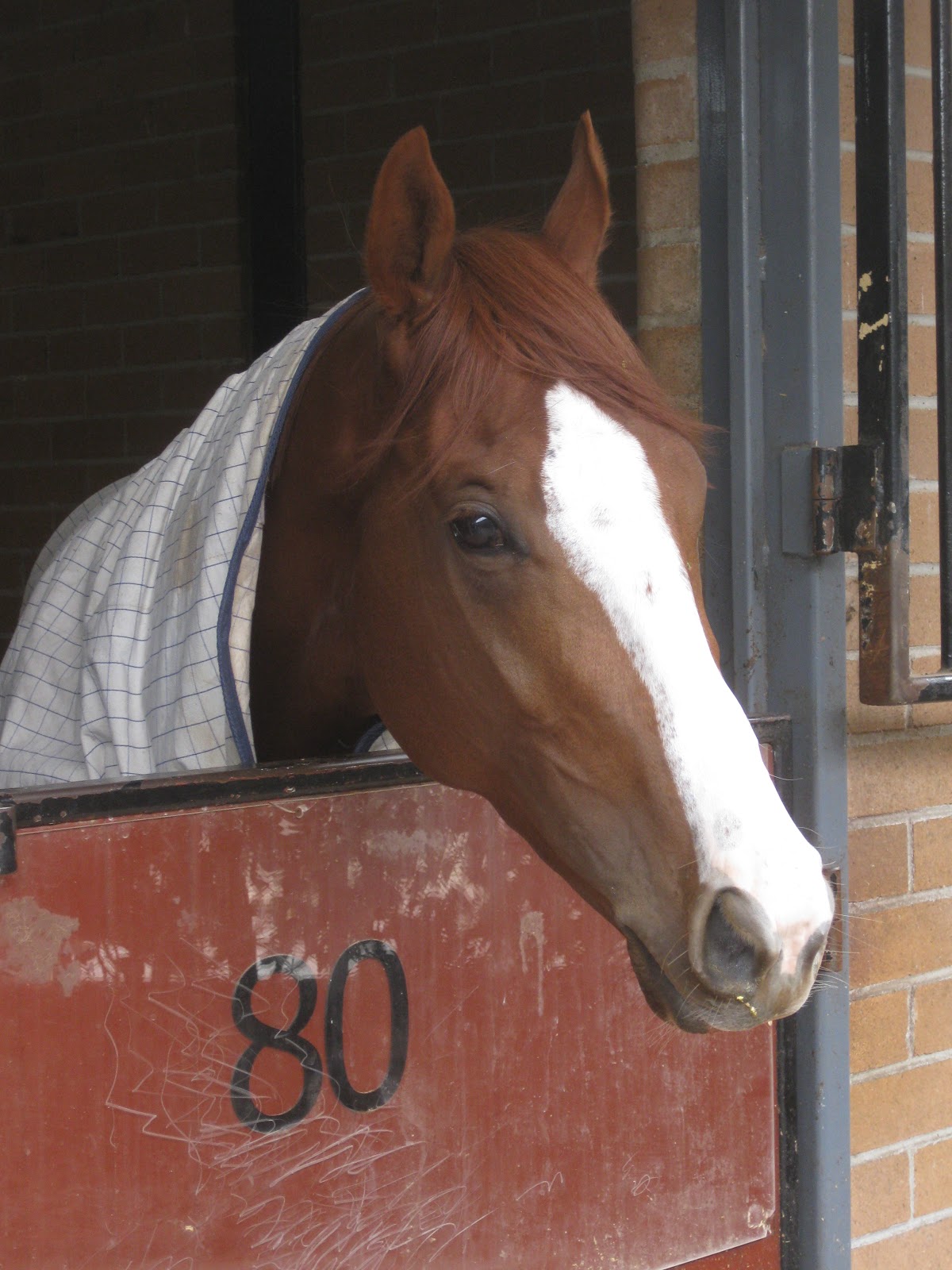
Helmet at trainer Peter Snowden's Crown Lodge
yard in Sydney
The blaze-faced chestnut showed a liking for Caulfield when winning the G3 Guineas Prelude (his younger brother has already emulated him by winning that event two weeks ago), but many called Helmet’s class into question, wondering if he was capable of winning a Group 1 event against top class 3-year-olds. Two weeks later, Helmet silenced his critics in a big way. When the barriers broke, the fastest horse to the lead was Manawanui, who had beaten Helmet in his last Sydney start in the Golden Rose. Kerrin McEvoy, the jockey aboard Helmet, quickly made the decision to confront his rival immediately, and hustled Helmet forward to blow past Manawanui. McEvoy must have truly believed he had the superior horse on the day, because to make a move like that was incredibly gutsy, and was not unlike what Tom Queally pulled off aboard Frankel at Newmarket, slingshotting clear of his rivals to put it all on the line with a risky run to prove once and for all who was the best. While Helmet did not show the sheer exceleration and wide winning margin that Frankel did in his Guineas, he nonetheless turned back the challenge of Manawanui in the straight, and while the margin of victory was only a neck, it is important to realize that Manawanui did not head Helmet, even in the gallop out. Kerrin McEvoy truly knew what he had, and it showed in not only one of the best performances of the year by a horse, but by a jockey, also.

To watch Helmet’s Caulfield Guineas, click here.

The Caulfield Guineas proved to be Helmet’s crowning glory, and his last career victory before retiring to stud. He was given a tall order when facing older horses for the first time next out in the G1 Cox Plate, and put in a good effort to be eighth, beaten 4 ½ lengths. His first run of 2012 resulted in a close finish to grab fourth in the G3 C.S. Hayes S. at Caulfield, but that was the closest he ever got again to finding the finish line first. After a brief career in Dubai and England, Helmet was retired to stud at Darley’s Northwood Farm in Seymour, Victoria, and it was recently announced that he will shuttle to Kildangan Stud in Ireland for the Northern hemisphere season.   

It would be a disgrace to discuss Helmet and Epaulette without mentioning their dam, the superstar producer Accessories. A British-bred daughter of Singspiel, Accessories has produced three Group stakes winners from her first three foals. In addition to Helmet and Epaulette, her first foal was Bullbars, a son of Elusive Quality who won the G3 C.S. Hayes S. as a 3-year-old. Bullbars finished second in the G1 Australian Guineas, just 1.8 lengths away from giving Accessories three Grade 1 winners from three foals to race. Breednet.com.au published this article on Accessories a few weeks ago.

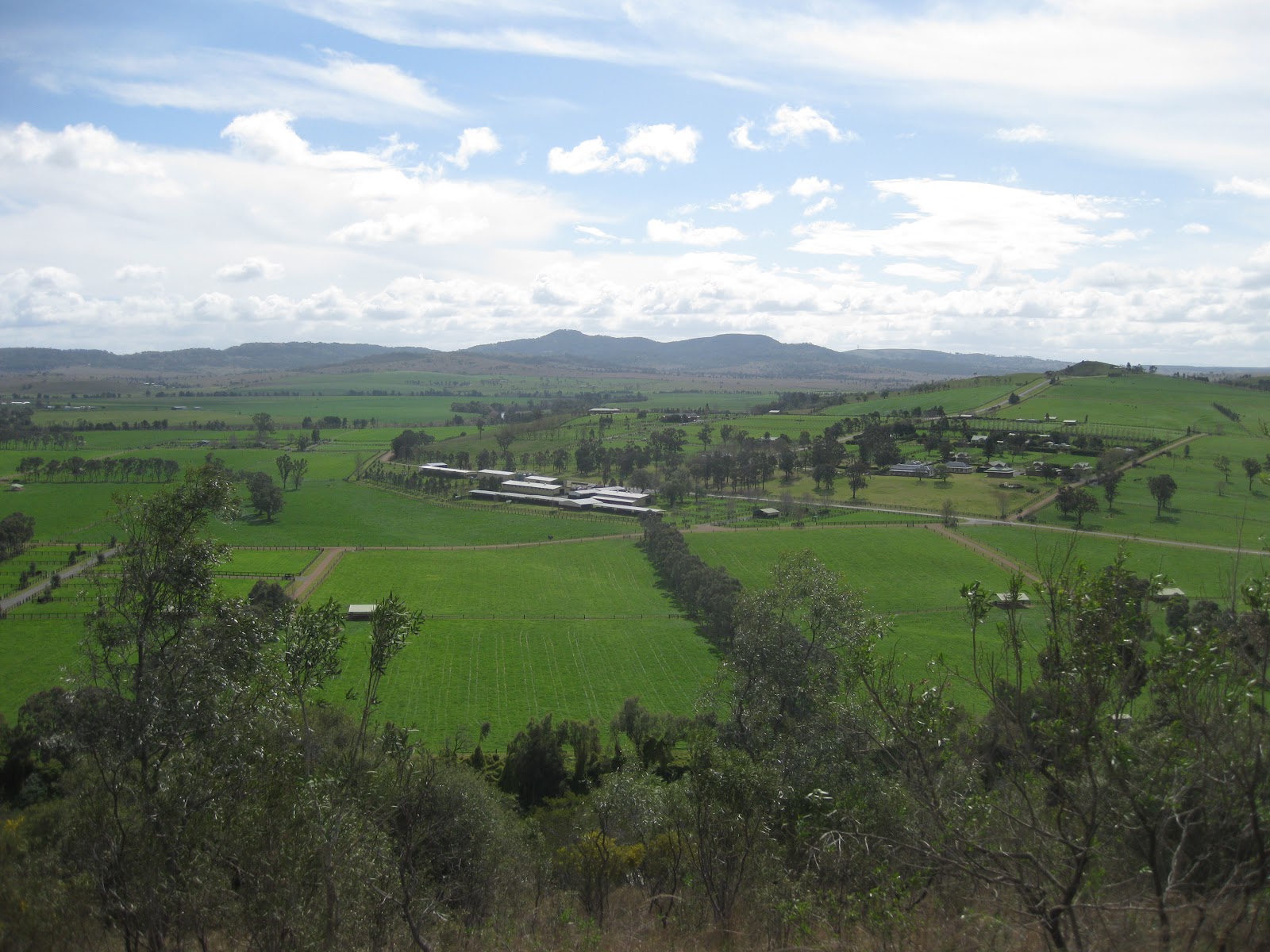
Darley's Woodlands Stud 

 Speaking of the Caulfield Guineas pedigrees, it should also be noted that while Pierro and Epaulette compete for different connections now, they were both bred by Darley, and were raised on the same pastures at the operation’s Woodlands Farm near Denman in the Hunter Valley. While Darley opted to let go of Pierro for A$110,000 as a weanling, his dam, the Irish-bred Miss Right Note, still resides at Woodlands, as does Accessories.

Darley's Woodlands Stud

 The Caulfield Guineas is certainly not a race lacking in pedigree strength. One of the dark horses of the race will be Patinack Farm’s All Too Hard, a half-brother to Australian champion Black Caviar, the world’s highest rated sprinter. While All Too Hard has been disappointing in his placings this season, he has never been beaten far, and one of his co-trainers, Wayne Hawkes, has been outspoken in the fact that he believes his colt could upset Pierro with an equipment change of sorts. Read what he had to say here.

Pierro or no Pierro, this year’s Caulfield Guineas is packed with interesting stories, and should no doubt produce an exciting outcome. For a form guide for the race, click here.

Thursday, September 20, 2012

Aussie Group 1 Has American Flavor


--by Kelsey Riley

With the first Group 1 of the year already in the books, the Australian spring racing season is in full swing. Last weekend, race goers at Rosehill in Sydney were treated to a thrilling one-two finish by Darley stable mates Epaulette (Aus) (Commands {Aus}) and Albrecht (Aus) (Redoute’s Choice {Aus}) in the G1 Golden Rose S., and this weekend the Group 1 action continues at Randwick in Sydney and Caulfield in Melbourne. Caulfield will host the enticing G1 Underwood S. over 1800m for 3-year-olds and older. This event has drawn top Australian-based gallopers Manighar (Aus) (Linamix {Fr}), Southern Speed (Aus) (Dubawi {Ire}), and Sincero (Aus) (Umatilla {Aus}), but also featured among the entrants are two runners with strong American ties.

Winchester (Theatrical {Ire}), winner of last year’s GI Sword Dancer and the 2010 GI Manhattan and GI Turf Classic Invitational, will make his debut Down Under. The 7-year-old has compiled a truly international record. He made his first five starts in Europe for trainer Dermot Weld, breaking his maiden in his second start in Ireland. After finishing a well-beaten 7th in the G1 Irish Derby, Winchester turned the tables in his stateside debut, winning the 2008 GI Secretariat S. by 7 ¼ lengths. After two subsequent (and unsuccessful) American starts, Winchester was turned over to trainer Christophe Clement. It was nearly two years before Winchester won again, but after getting back to his winning ways in a Keeneland allowance event in April 2010, he added two more Grade I victories that year. After a fourth place finish in that year’s Breeders’ Cup Turf, Winchester travelled to Hong Kong for the G1 Cathay Pacific Hong Kong Vase, where he was a well-beaten 11th. He redeemed himself by winning last year’s Sword Dancer, and early this year was announced as retired by his owner/breeders, Mr. and Mrs. Bertram Firestone. As it would turn out, the star turfer was picked up by Anthony Mithen’s Rosemont Stud in Australia as a G1 Melbourne Cup prospect and is now trained in Melbourne by John Sadler (the Australian version).

The second American interest is Sanagas (Ger) (Lomitas {GB}). Although he is German-bred and recorded his first five starts (for four wins) in that country as a 4-year-old, Sanagas was transferred to the States in the middle of his 5-year-old campaign by owner Andreas Jacobs, and entrusted to trainer Graham Motion. Sanagas went on to have a very productive season, recording wins in the Johns Call S. and the GIII Sycamore S. before tallying his most important win to date in the GI Hollywood Turf Cup. After a sixth place finish in his seasonal debut in the GII San Marcos S. at Santa Anita Feb. 11 for trainer Peter Miller, Sanagas was sold to the BC3 Thoroughbreds partnership in Australia. He joined the barn of the legendary Aussie conditioner Bart Cummings, and finished 13th in his Aussie debut over this strip in the G2 Memsie S. Sept. 1.

While these two former American gallopers should be well regarded by Aussie punters, as mentioned previously it will certainly not be a cakewalk for them. Manighar, Southern Speed and Sincero are among the highest rated horses in that country, and should all be doing well fitness wise with solid runs under their girths already this prep. In fact, it was Sincero who won the Memsie that Sanagas participated in. Maluckyday (NZ) (Zabeel {NZ}) a consistent Group 1 galloper and one of the early favorites for the Melbourne Cup, was eighth in the Memsie. Niwot (Aus) (Galileo {Ire}), a Group 1 winner early this year, was 12th that day. Ocean Park (NZ) (Thorn Park {Aus}), second in last year’s G1 Rosehill Guineas, won his seasonal debut in New Zealand in the Challenge S. Sept. 1. It is important to note that most of these horses are considered route specialists, and it is normal in Australia for trainers to build their horses up to running longer distances throughout a prep. Therefore a race like the Memsie (at 1400m {7 furlongs}) would have been far from ideal for a number of its competitors (including Sanagas), and it is important to watch how these horses come into shape as they step up in distance throughout the season.

For the form for the Underwood, click here.

Across the country in Sydney, eight will line up for the 1600m G1 George Main S. at Randwick. Americans will likely best resonate with All Too Hard (Aus) (Casino Prince {Aus}), the 3-year-old half-brother to Black Caviar who excited race goers with three straight wins to begin his career last season. The colt appeared to falter when stepped up to top class competition, however, and is winless in his last three starts. He has not been beaten far, however, and he gets a break in the weights of up to 19 pounds from his rivals. His older sister didn’t reach her best stride until later in life, so it probably isn’t wise to throw this guy out yet. The George Main will certainly be a tough task, though, as razor sharp trainer Chris Waller brings three, including Group 1 winner Shoot Out (Aus) (High Chaparral {Ire}), who makes his first start of the season off a strong trial win Sept. 10. Although stablemate Danleigh (Aus) (Mujahid) doesn’t boast quite as flashy a record, he appears to be coming into excellent form, and could be interesting here. Secret Admirer (Aus) (Dubawi {Ire}) was a very consistent galloper in Group company last season, and returns to the track and trip of her career best score last season in the G1 Epsom S., so should not be discounted.

For the form for the George Main, click here.

The Underwood will go off at 1:40 am Eastern time Saturday morning, and the George Main at 2:00 am. So if you're able to stay awake, it will be worth tuning in to TVG to watch!

Tuesday, June 26, 2012

Guest Post: Royal Ascot Hangover


By Kelsey Riley

Royal Ascot is over for another year. And what a renewal it was. Although I have only been following racing outside America for a few years, this was easily one of the most anticipated and exciting few days I have experienced in the sport. The spotlight was on undefeated high weights Frankel and Black Caviar in their respective races.

Frankel opened the show with a flourish, winning the Queen Anne Stakes by an authoritative 11 lengths in what may have been his greatest performance in an already illustrious career. I am sure this was the greatest racing performance I have ever seen, in terms of sheer dominance, and obviously others agreed: he was assigned a Timeform rating of 147, making him the highest rated horse in history on that scale. Now trailing in his wake are all-time greats Sea Bird (145) and Tudor Minstrel and Brigadier Gerard (144).

Frankel and Tom Queally crush the Queen Anne

Here is an article that describes how Frankel’s all-time high Timeform rating was achieved: 

http://frankel.juddmonte.com/media/articles/queen-anne-winner-is-timeforms-highest-rated-horse-in-history.aspx

Here is a list of the all-time highest rated horses by Timeform: 

http://www.timeform.com/show_article.asp?num=122


In the end, though, the week was all about Black Caviar. It was an incredible build up to the Diamond Jubilee Stakes on the final day of the meeting, and her fans were prepared, turning out in their Black Caviar paraphernalia every day of the lead up. And just like the preceding days, the aftermath has been all about the great mare as well.

The build up to the race was all about comparing Frankel and Black Caviar, something I grew tired of pretty quickly as you could tell by my last blog. Europeans were quick to throw their support behind Frankel, boasting about why he is better, and Aussie’s the same with Black Caviar in their camp. The aftermath, however, has seen a refreshing sense of appreciation for both animals. It seems as though racing fans everywhere were humbled by Black Caviar’s near defeat, realizing how difficult the task dealt to her actually was when she seemed invincible. For reasons that we’ll never be entirely sure of, Black Caviar ran 15 rating points short of her best performance in winning the Diamond Jubilee by a nose, recording a rating of 115, her lowest number in almost two years. Perhaps it was the testing track, the muscle tears she sustained in running, or the fatigue of international travel (the relatively slow time and weak field would also have hurt the rating). It was probably a bit of everything.

Black Caviar and Luke Nolen win the Diamond Jubilee

The most important measure of Black Caviar’s greatness in this instance was laid out by Timeform analyst Simon Rowlands. Rowlands pointed out in an article on Betfair.com that of the 392 horses that ran over the five-day Royal Ascot meeting, 46% (including Black Caviar) ran 13lbs or greater below their pre-race figures. Black Caviar was the only one good enough to still win, and a Group 1 at that, also overcoming a questionable ride. To me, that is simply remarkable. Rowlands’ article can be read here: 

http://betting.betfair.com/horse-racing/timeform-debate/royal-ascot-racing-owes-a-great-debt-to-black-caviar-250612-43.html. 


Here is another story by Racing Victoria’s chief handicapper Greg Carpenter (also on the World Thoroughbred Rankings panel) along similar lines:

http://www.heraldsun.com.au/sport/superracing/racing-victoria-chief-handicapper-says-black-caviar-ran-15-ratings-points-below-her-best-in-diamond-jubilee-stakes/story-fn67siys-1226407965395

I think racing fans and commentators everywhere were united in the shock dealt by Caviar’s near blow, and the result has been an outpour of appreciation for the great mare (even from the British). Gone from the media are comparisons of Black Caviar and Frankel and arguments over who is better. It is clear now that the two cannot be compared, as there is no way to stage a fair contest between them. Black Caviar will now return to Australia likely to stay, and Frankel will remain in Britain.

I must say that amongst the media crush and pressure last week, Frankel’s trainer Sir Henry Cecil was the ultimate gentleman and professional. While he could easily have boasted about Frankel’s superiority after the colt’s Queen Anne romp, the master trainer remained humble, refusing to compare his colt to any other horse or to discredit Caviar at all.  

Getting back to this week’s post-race coverage, there has been some excellent commentary and analysis. I think it is a really positive sign for the industry that so many reporters are engaging in thoughtful analysis, as it is a common criticism (by me included!) that the industry is too archaic and poor at keeping records. It is this type of figurative analysis that will give mainstream fans a historical context and benchmark by which to understand the sport, and encourage their interest in racing. Here is another good article in addition to the two listed above:

http://www.independent.co.uk/sport/racing/caviars-close-shave-still-a-measure-of-true-greatness-7879738.html.


A shout out must also go to the ever charismatic Australian fans. In addition to the estimated 3000 that turned up at Royal Ascot with their Black Caviar ties, hats, and flags, millions more watched from their homeland and elsewhere. Fans packed Melbourne’s Federation Square at a chilly 12:45 am (remember it’s winter there) to cheer home their heroine on the big screen, and they didn’t disappoint. Check out this video:

Black Caviar fans pack Melbourne's Federation Square
to watch the Diamond Jubilee

I spent four months of last year in Australia, and I found that Australians are some of the most incredible and enjoyable people to be around: they simply love gambling and sport, and will easily latch onto anything that resembles either and provides a thrill. They are the key reason why Australian racing is thriving: it seems that almost everyone in the country either owns a “leg” of a horse, bets regularly, or at least likes to dress up and go to the races, and they embrace a culture that is lost amongst the mainstream public in many other countries, especially America. Racing is regularly front page news in Australia. If we could bottle up some Aussie enthusiasm and spread it around America and Europe, racing would be thriving once again.

Here is proof of this observation: I watched the Diamond Jubilee Stakes on TV in the corner of a pub in Galway, Ireland. About a half hour before the big race, a family came in and sat at the table beside me. Seeing I was engrossed in the racing, they asked when Black Caviar was running. They said they were from Australia, and knew nothing about racing, but they heard Black Caviar was running so wanted to watch the race. I proceeded to share with them everything I could about Black Caviar, racing, and my time working for Peter Moody, and they were thrilled. In the end I hope I contributed to them becoming lifelong racing fans, but hey, they’re Australian, they were destined anyway.

So here’s to Black Caviar and Frankel, two undefeated champions from Australia and Europe, and two of the greatest horses ever. We are so fortunate to have been fans of racing in their time, and hopefully we will get the chance to see each of them a few more times before they embark on their careers in the breeding shed in their respective hemispheres.

If, like myself, you would like a bit of the hair of the dog to overcome your Royal Ascot hangover, here are some pictures from my two days there last week (Tuesday and Wednesday).

--Kelsey Riley is a second year trainee on the Darley Flying Start programme. She will join the TDN staff in July.


Frankel and Tom Queally after winning the Queen Anne
So You Think in the parade ring before the Prince of Wales's
The Ascot parade ring/grandstand

Frankel
William Buick returns on Joviality after winning the Windsor
Forest Stakes


Thursday, April 26, 2012

Guest Post: Why I Love Australian Racing


This Saturday, Australian two-year-old superstar Pierro will attempt to make history when he starts in the G1 Champagne Stakes at Royal Randwick in Sydney. The Champagne is the third leg of Australia’s two-year-old Triple Crown, and Pierro enters the 1600 metre contest off decisive wins in the first two races: the Golden Slipper on April 7, and the Sires Produce Stakes a week later.

Pierro represents everything I love about Australian racing. Trained by celebrity conditioner Gai Waterhouse, Pierro has danced every dance and dismantled all challengers this campaign. Declared “the 2012 Slipper winner” by Waterhouse after his debut victory last October, Pierro was put away for a few months to rest up for a bold autumn campaign in Sydney. The Darley-bred son of Australian champion sire and first-season American shuttler Lonhro opened 2012 with a win in the G2 Silver Slipper Stakes over 1100m at Rosehill. His next task was the G2 Todman Stakes over 1200m again at Rosehill, an important prep for the $4 million Golden Slipper, the world’s richest two-year-old race at the same venue and distance two weeks later. Pierro dug deep to take both contests, beating favoured Samaready, the leading Victoria-based two-year-old, in the Golden Slipper. Wheeling back off a week’s rest, Pierro toyed with the fresher All Too Hard, the previously unbeaten half-brother to Black Caviar, in the Sires Produce.

Pierro wins the Golden Slipper

In short, Pierro’s campaign has been defined by fierce contests off short periods of rest. While this may seem remarkable to foreign audiences, in Australia it is the norm in premier racing: the country’s leading group one performers will routinely race once every week or two weeks during the country’s top spring and autumn carnivals. In America, we yearn for the times when horses competed more than once a month, with the best going head-to-head race after race. In Australia, this is still happening, usually every Saturday in Sydney or Melbourne.

This realization would lead one to think that Australian horses are tougher than others. Maybe this is true. I personally believe it’s the way they’re managed that leads to their resilience. During a four-month stint in Australia last fall (their spring), I was very fortunate to spend a month working in the stables of one of the perennial leading trainers in Melbourne, Victoria. Aside from the lack of race day medication (which everyone already knows about) in Australia, there were a few things that stood out to me in this particular yard: first of all, no horses wore stable bandages unless they had a significant problem (and in my time there, none did).

In addition to their morning exercise, every horse was taken out in the afternoon to walk and swim 
(swimming is a big part of the Australian training climate in general). I believe this contributed greatly to mental soundness as well as physical soundness. There was not one horse of about 40 in the yard that I could not lead without a bit or nose chain, or leave standing quietly in cross ties during grooming. This included colts, geldings and fillies of all ages. In addition, there was not one horse in the yard that would lay back its ears or bite when a human passed the stall.

The final major contributing factor to the constitution of the Australian race horse is, I believe, their spelling regime. “Spelling” refers to the routine of putting the horses out to paddock for up to a few weeks as a break from training. So while the horses are raced hard, they are also spelled frequently. Depending on the mindset of the horse, it may be every few starts, or every few months. Generally, when a horse seems to be falling off form or developing a sour attitude, the trainer will send it out for a spell. This means up to a few weeks in a paddock on a farm, just “being a horse”.

It is important to note that, unlike in Europe where horses train on vast countryside gallops on a program that values stamina over speed, the Australian training program is more similar to America than anywhere else. Like in America, Australian’s train at racetracks in big cities, and they value fast times and precocity in their racehorses. Although Australia seems a world away, their training and racing environment are actually quite similar to those in America.

In addition to this time at the racetrack, I also spent a few weeks working on Darley's Woodlands Farm, where Pierro was born. In Australia, mares are foaled outside (their tepid climate gives them that luxury), and if both are healthy, it is possible that the foal will never see a stable until it is a weanling or yearling. While this can have both positive and negative implications, the upside is that all that time spent outside in its natural environment must be healthy for the foal.

When he lines up for the Champagne on Saturday, Pierro will attempt to become the sixth horse to win the Triple Crown. He has history on his side. It was last won by the Waterhouse-trained Dance Hero in 2004, and that conditioner nearly won it again in 2008 with Sebring before a narrow loss in the Champagne. The other winners are Baguette (1970), Luskin Star (1977), Tierce (1991), and Burst (1992).

For me, the best thing about Pierro is that there may be no limit to how good he is. It is important to note that the dark bay has already outrun his pedigree. As previously stated he is by Lonhro, a multiple G1 winner at up to 2000 metres at 3,4,5, and 6, whose progeny usually don’t get going until their later years. Pierro is out of a mare by Daylami, a stallion who performed well as a two-year-old but excelled later in life at longer distances, and typically sires horses in that mould. It would seem that Pierro was never meant to win, let alone become a champion, over sprint distances at two. If he follows his pedigree pattern and become better with age and distance, who knows how good he could be.

Lonhro's late run earns him a legendary renewal of
the Australia Cup in 2004.

Pierro’s Champagne Stakes is one of four G1 races scheduled for Saturday at the Royal Randwick meeting. The feature race is the 3200m Sydney Cup. Trainer Chris Waller saddles three, including the favoured Permit and last year’s winner, Stand to Gain. Waterhouse will saddle the mare Older Than Time, a stalwart route horse on the Sydney and Melbourne circuits.

The most intriguing race on the card to me is the 2000m Queen Elizabeth Stakes, where top mares More Joyous and Secret Admirer take on Melbourne Cup winner Americain and other top older horses Manighar, Jimmy Choux, and Rangirangdoo. More Joyous has won all three starts this year since March 24, and Manighar is four for five this year, including two wins over Americain. In the G1 All Aged Stakes, star three-year-old filly Atlantic Jewel will take on older males over 1400m.

Add Black Caviar going for her 20th consecutive win across the country in Adelaide in the G1 Sportingbet Classic at Morphetteville, and you have quite the day’s racing in the land down under. But Australian racing breathes excitement, so what more could you expect?

**

This weekend will be an exciting one for international racing, with additional group ones taking place in Hong Kong, South Africa, and France. In Hong Kong on Sunday, local favourites including California Memory, Irian, Pure Champion, Fay Fay, and Sweet Orange will line up against international contenders like Ireland’s Treasure Beach, France’s Chinchon, and the Mike de Kock trained Viscount Nelson. Across the globe in South Africa, superstar sprinters will take centre stage on a card of four G1 races at Turffontein, highlighted by What a Winter, Val de Ra, and JJ the Jet Plane in the Computerform Sprint. In France, last out Dubai Sheema Classic winner Cirrus des Aigles highlights the G1 Prix Ganay at Longchamp. Those looking to take down his colours could include So You Think, Wigmore Hall, and Reliable Man.


-- Kelsey Riley is a second year trainee on the Darley Flying Start program. She will join the TDN staff in July.       

Monday, January 23, 2012

Grand Finale Down Under

--Christina Bossinakis

   Last Monday morning, not-so-bright but certainly early, I departed the Gold Coast and arrived at the Brisbane airport. Lacking any pep in my step because of my ongoing battle with fatigue (the Broadbeach hot spot Moo Moos every night could do that to you) and a developing cold, I lumbered onto a flight headed for Sydney, and ‘lo and behold, who should I cross paths with once again, but John and Kris Messara. Shortly after arriving in Sydney and while waiting for our baggage, my cousins (it seems to have stuck) kindly invited me to their Sydney home for dinner Thursday evening. Following a week of great experiences and even better coincidences, this would certainly be a treat.

   Before I would be spending any time in the city, however, plans called for a midweek field trip to Coolmore in Jerry’s Plains with some of my nearest and dearest friends. Embarking on the journey were Asiyah (who could certainly tell you a story or two about my university days in Montreal), her Aussie husband Shane, her mom Annila and baby Gabby. We were greeted by a lovely day and an equally warm welcome by Australia’s Coolmore team.

Coolmore Australia
   Our visit kicked off with a stop at the stallion barn, where we saw residents Royal Academy and Encosta de Lago, Haradasun, Oratorio and Choisir (now those are hindquarters!), all of whom looked magnificent. We later headed off to see some of the broodmares, including G1 Australian Oaks winner Circles of Gold, dam of champions Elvstroem and Haradasun; Samantha’s Choice, dam of champion 3YO and leading sire Redoute’s Choice; and the Group 1-winning daugher of Serena’s Song, Sophisticat (a $3.4-million yearling purchase). We also paid a visit to the Fastnet Rock--Rose of Cimmaron colt that brought the sales’ topping A$960,000 at last week’s Magic Millions sale on the Gold Coast. Hanging out in a very large paddock with a young buddy, the super-refined yearling gave me a knowing glance as I approached, as if there was a sense of recognition from the week before. Or maybe it was just a look of annoyance given I was interrupting snacktime? Truth of it was, the handsome bay is a seriously laid back colt, who couldn’t have cared less if we had brought along a troupe of dancing monkeys with us. Good thing we left those at home.

   Without a doubt, the highlight of the trip was a visit with arguably (not by me) Australia’s greatest route mare, Makybe Diva. The fairest comparison by North American standards, and the only other mare from this era I might dare compare her, would be Zenyatta. When you take a moment to look at the 13-year-old’s list of accomplishments on the racetrack, it is really quite extraordinary. A two-time Australian Horse of the Year; multiple divisional champion; seven-time Group 1 winner, including three wins in the G1 Melbourne Cup; and earner of over A$14.5 million. That is some of the most serious street cred most of us will ever have a chance to gaze upon. With a Lonhro colt at her side, ‘the Diva’ certainly lived up to her name on the track and, quite deservedly, is relishing the royal treatment she is now enjoying as a broodmare.

Makybe Diva & CBoss

   To cap off an already spectacular day, Peter O’Brien invited us back to his house for some beer (the boys were certainly ready), lovely wine (we are in the Hunter Valley, after all) and a great barbeque, commandeered by grill master Shane McGrath. Also in attendance was GM Michael Kirwan and his children, who are quite honestly the most polite and respectful youngsters I have encountered in quite some time. A quick sidenote, if you ever encounter Coolmore’s stud manager and he tries to feign ignorance in the kitchen, don’t believe him. He has a set of knife skills that would have even Bobby Flay reaching for the blade sharpener. Great horses, great food and even better company; our trip to Coolmore certainly ticked all the boxes.

The great Danehill

   The week, and my trip, concluded with a small dinner party at Casa Messara in Sydney. The soiree--hosted by the remarkable Kris Messara--kicked off with a small group of ladies, including Sky (tv) presenter and personal friend Jo McKinnon, TVN presenter Caroline Searcy (these ladies are as good as it gets) and Arrowfield’s Megan Kelso. The gathering of ladies enjoyed spectacular views and lovely appetizers ahead of a wonderful meal. Half way through dinner, Arrowfield master John Messara arrived--accompanied by Racing NSW’s board member Tony Hodgson--after having attended the Sydney launch of the movie Buck. What ensued was plenty of thought provoking and interesting conversation that really made the occasion one I will remember for a very long time. Very early on, it was clear that I was in the presence of industry leaders and their knowledge and insight into Australian racing was really refreshing for someone with a decidedly North American perspective.

   During the course of my three-week visit in Oz, I encountered innumerable experiences that made my trip so enjoyable, but it will be the people I encountered along the way that will make my trip to Australia rank as one of the best ever. It never ceased to amaze me just how generous, genuinely warm and welcoming the locals are, and not because they have to be, but simply because it is their way. I loved every moment of it and met many people who, I am confident, will remain friends well beyond my return. The visit also underlined one of the best things about our industry, which is no matter which racing venue you might venture to on the international stage, you will always find and enjoy a sense of comradery with the locals simply by extension of our sheer love of the game. For those who have yet to make the trip down under, you should definitely work it out for this next year, because it is really something to experience.